

Inside the Making of a Hunter’s Coat

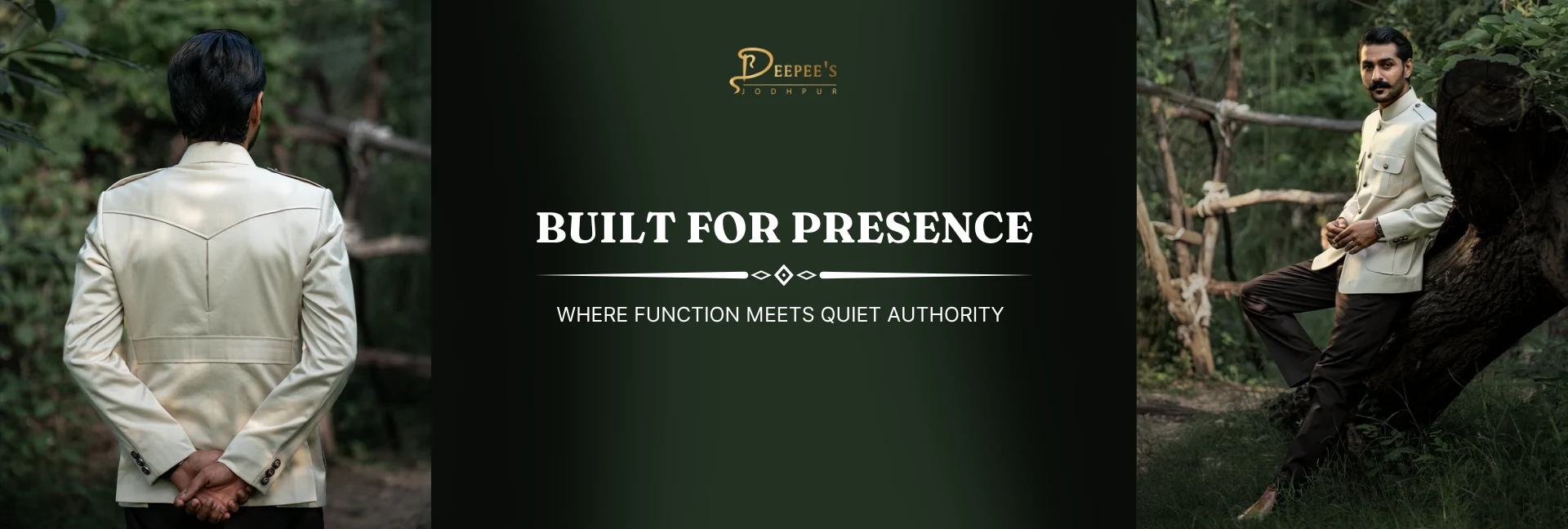
A Cold Morning. A Long Silence.
The desert is quieter in winter.
The kind of quiet where even movement feels deliberate.
Where the wind doesn’t rush—it cuts.
Where the air lingers against your skin, reminding you that warmth is not a luxury, but a necessity.
In such conditions, clothing is not about expression.
It is about survival.
You don’t wear something because it looks good.
You wear it because it performs.
And it is in this exact environment that the Hunter’s Coat finds its origin.
A garment built not to impress—but to endure.
Not to decorate—but to protect.
Not to follow trends—but to hold its ground against them.
The Origin of the Hunter’s Coat
To understand hunter coat mens India, it’s important to look at its origin without the lens of modern fashion.
The hunter’s coat was never conceptualised as a style piece.
It was designed for:
- Long hours outdoors
- Cold, unpredictable weather
- Continuous movement across terrain
Historically, such coats were worn in environments where function was non-negotiable. Hunting expeditions, travel across open landscapes, and early forms of field activity required garments that could withstand exposure while allowing mobility.
This led to the development of a coat that was:
- Longer than conventional jackets
- Heavier in construction
- Structured for durability
Over time, as these environments influenced culture and lifestyle, the coat transitioned into a more refined version—retaining its functional base while adapting to structured menswear.
What remained constant, however, was its core idea:
A garment that performs first—and then carries presence.
Purpose: Protection Meets Authority
The hunter’s coat exists at the intersection of function and form.
Its original purpose was clear—protection.
But over time, it developed a secondary role—authority.
Protection
The design ensures:
- Coverage against wind and cold
- Insulation without excessive layering
- Stability across long durations of wear
Unlike short jackets, the extended length protects not just the torso but also the lower body, making it suitable for colder climates and longer outdoor exposure.
Authority
Structure creates perception.
The hunter’s coat naturally builds:
- A strong shoulder line
- A defined vertical fall
- A composed silhouette
This gives the wearer a sense of presence that shorter garments cannot replicate.
It doesn’t just cover the body.
It defines it.
Fabric Choices: Where Craftsmanship Begins
The making of a hunter’s coat starts with fabric selection.
Because in garments like this, material is not just a surface—it is performance.
Tweed
One of the most traditional materials associated with structured coats.
- Naturally textured
- Highly durable
- Resistant to wear and environmental exposure
Tweed brings a certain ruggedness that aligns with the coat’s origin.
Wool Blends
Modern adaptations often use wool blends for balance.
- Provide warmth without heaviness
- Allow breathability
- Retain structure over time
These fabrics are especially relevant in winter ethnic wear for men in India, where temperature variations demand flexibility.
Terry Wool & Advanced Blends
For refined finishes, blends like terry wool are used.
- Smooth surface
- Structured drape
- Comfortable for extended wear
The aim is not just warmth—but consistency in how the coat behaves.
A good fabric does not just look good.
It performs across time.
Structure Breakdown: The Anatomy of a Hunter’s Coat
A hunter’s coat is defined by its construction. Every element is engineered to contribute to both function and visual balance.
The result is a garment that feels composed, balanced, and technically sound.
Shoulders
- Structured to hold posture
- Not overly padded, but firm enough to define shape
- Acts as the foundation of the entire silhouette
Length
- Extends below the hip, often approaching the knee
- Creates a vertical line that enhances height and presence
- Provides additional protection in colder conditions.
Layering Design
- Built to accommodate inner garments
- Allows flexibility across temperatures
- Maintains shape even when layered
Front Construction
- Clean button alignment
- Balanced spacing for visual symmetry
- Minimal distraction from the overall form
Sleeves
- Designed for movement without distortion
- Maintain alignment with shoulder structure
- Ensure ease without compromising fit
The Modern Adaptation in Indian Menswear
Today, the hunter’s coat has found a strong place in long coat mens India and luxury ethnic wardrobes.
But its transition into modern menswear has been careful.
It has not been:
- Over-embellished
- Over-styled
- Reduced to costume
Instead, it has been refined into a versatile outer layer that fits seamlessly into contemporary dressing.
You’ll now see hunter’s coats:
- Styled over bandhgalas at winter weddings
- Worn at evening events for added structure
- Used in formal gatherings to create depth in attire
This evolution reflects a broader shift in indian designer menswear—from decorative clothing to structured dressing.
Styling the Hunter’s Coat Today
The hunter’s coat works because it adapts without losing its identity.
- ₹18,500.00
- ₹18,500.00
- ₹15,500.00
- ₹15,500.00
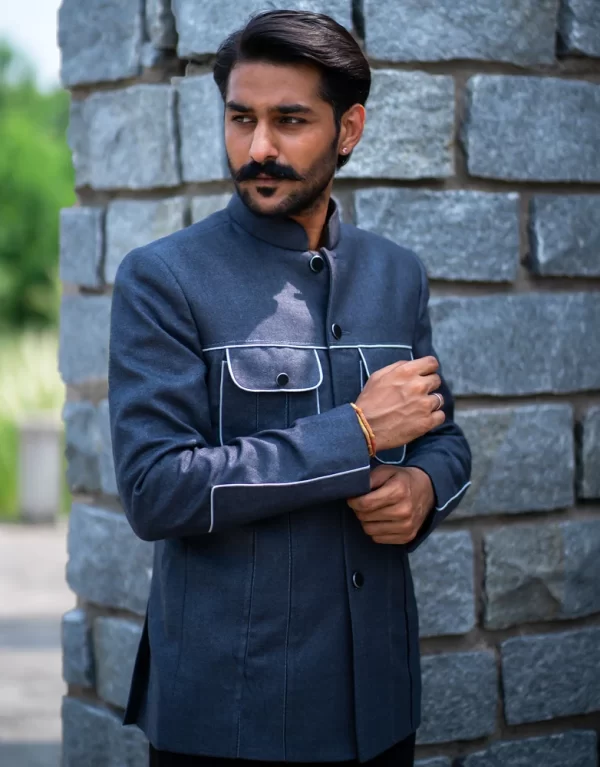
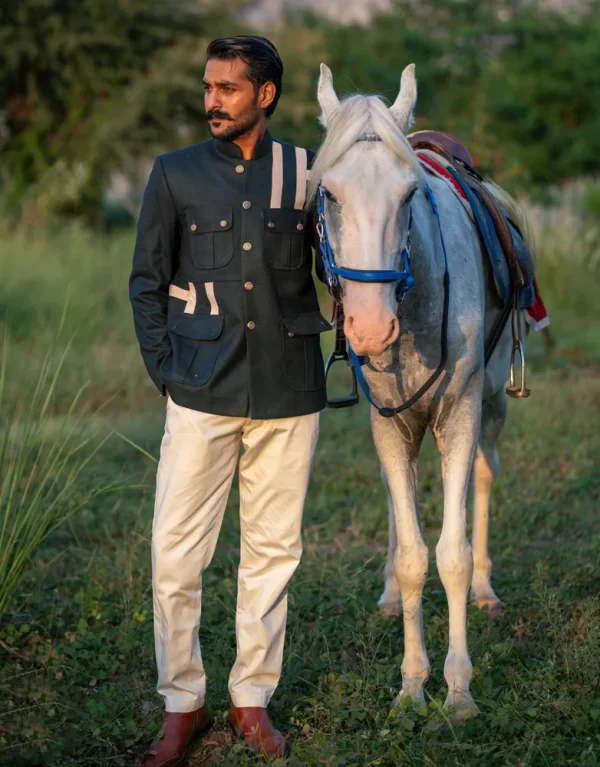
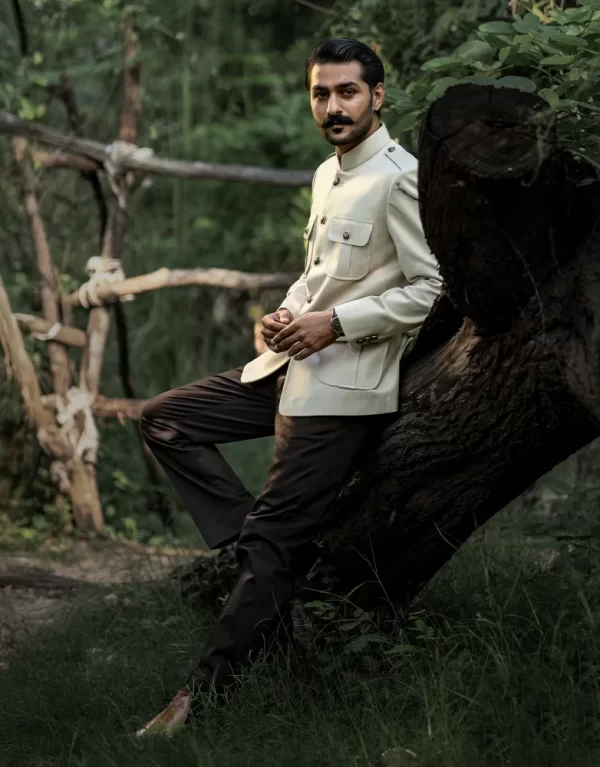
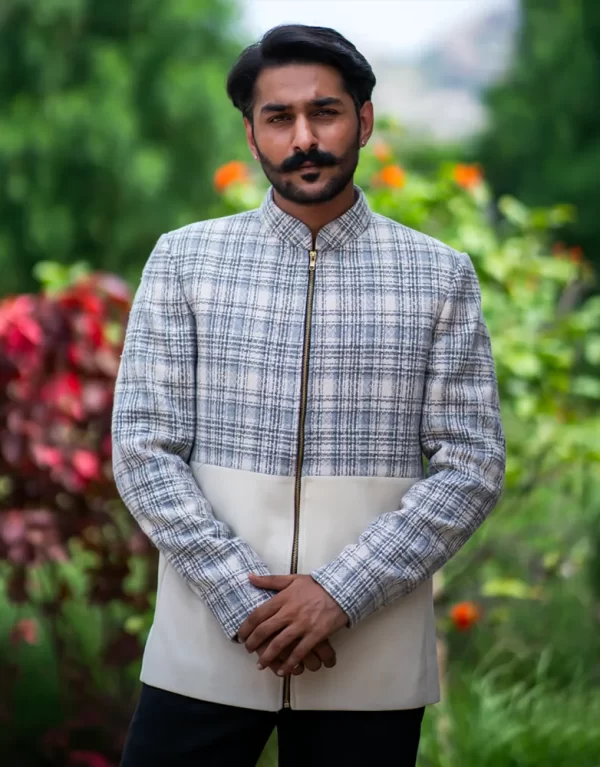
Winter Weddings
- Paired with structured innerwear like bandhgalas
- Adds warmth without compromising elegance
- Creates a complete, layered look
Evening Occasions
- Works best in deeper tones
- Enhances presence without excess
- Ideal for semi-formal settings
Cultural & Formal Events
- Bridges traditional and contemporary styling
- Offers depth without visual clutter
The key is balance.
The coat already carries visual weight.
Everything else should remain understated.
Deepee’s Craftsmanship Approach
At Deepee’s Jodhpur, the hunter’s coat is approached as a structural garment—not just seasonal wear.
Each piece is built with:
- Precision tailoring
- Fabric integrity
- Balanced proportions
- Long-term usability
Under the direction of Abhishek Trivedi, the approach is consistent:
Build garments that hold their structure over time.
This means:
- Avoiding unnecessary embellishment
- Prioritising fit over decoration
- Ensuring repeat wearability
Every coat is designed to:
- Sit cleanly on the body
- Maintain form through movement
- Remain relevant across occasions
More Than Just Outerwear
The hunter’s coat is not just an additional layer.
It is a defining layer.
It adds:
- Structure to the silhouette
- Weight to presence
- Clarity to dressing
In a wardrobe filled with temporary pieces, it stands out as something built to last.
Conclusion
Explore Hunter’s Coats at Deepee’s
Deepee’s Jodhpur
Address: 2nd Polo, Paota C Road, Jodhpur (Raj.)
Call Us: +91 9530123489
Visit Us: www.deepeesjodhpur.com
Explore hunter coats designed for structure, performance, and long-term relevance.
Visit the store or browse online to discover winter menswear that goes beyond trends.
Frequently Asked Questions
A hunter coat is a long, structured coat originally designed for outdoor use, offering protection, durability, and a strong silhouette.
Common fabrics include tweed, wool blends, and structured textiles that provide warmth and durability.
Yes, it is widely used as winter ethnic wear for men in India, especially for weddings and evening events.
A hunter coat is longer, more structured, and designed for both function and presence.
You can explore premium hunter coats at Deepee’s Jodhpur, known for its craftsmanship and tailored designs.