

Bandhgala vs Sherwani – Which Is Better for Modern Indian Grooms?

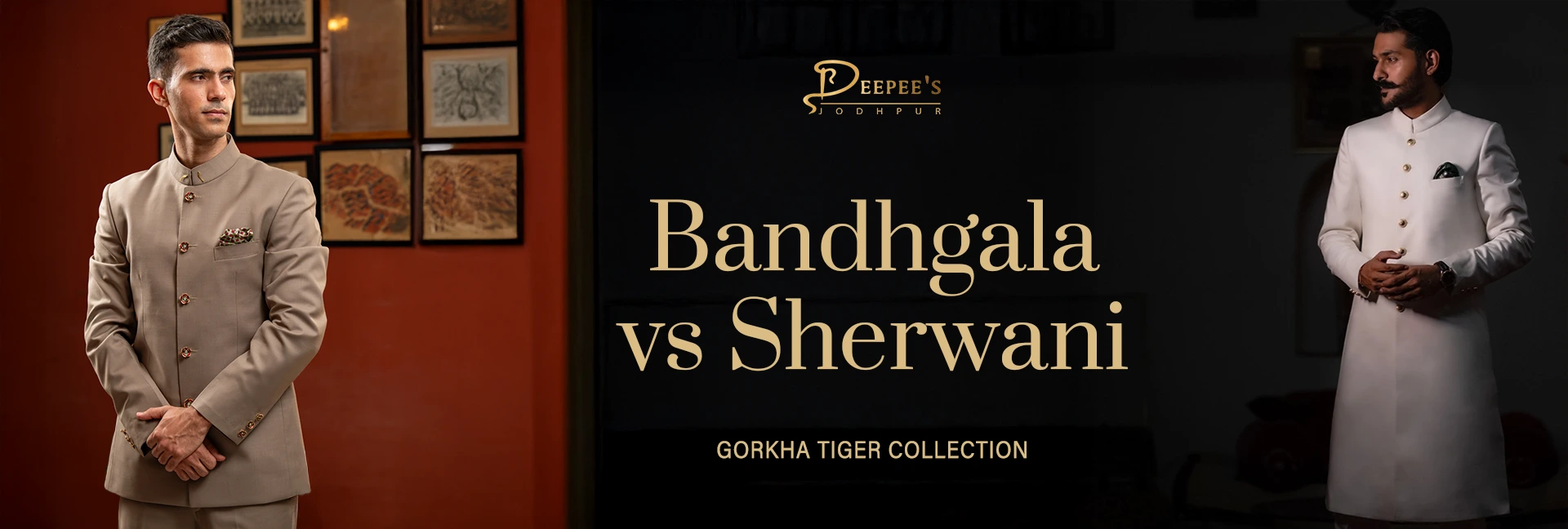
For years, the blazer has been the default answer to formal dressing for Indian men. Office meetings, weddings, receptions, even festive gatherings — the blazer slipped into every occasion quietly and conveniently. But something has been shifting.
Indian men are asking a different question now:
Is a blazer really the best option for Indian formal occasions?
This is where the bandhgala vs blazer conversation begins — not as a trend comparison, but as a deeper look at identity, structure, and cultural relevance
Why This Decision Matters More Than You Think
For years, sherwanis were the default choice. They symbolised celebration, status, and ceremony. But modern Indian grooms are no longer choosing outfits just because they’re expected to.
They’re asking:
- Will I feel comfortable in this for hours?
- Does this feel like me, or like a costume?
- Will this look timeless in photographs 10–20 years from now?
This is where the bandhgala quietly enters the conversation — not as a trend, but as a thoughtful alternative.
Understanding the Core Difference: Bandhgala vs Sherwani
Before choosing, it’s important to understand what each garment truly represents.
The Sherwani: Tradition and Grandeur
A sherwani is designed to celebrate the occasion loudly and visibly. Traditionally, it is:
- Long and layered
- Richly embroidered or embellished
- Paired with dupattas, turbans, and jewellery
Sherwanis work beautifully when:
- The wedding is large and ceremonial
- The family prefers visual grandeur
- Cultural expectations are strong
However, sherwanis are also:
- Heavy, especially with embroidery
- Restrictive after long hours
- Difficult to transition between events
This doesn’t make sherwanis outdated — it makes them specific.
The Bandhgala: Structure and Presence
A bandhgala, by contrast, is rooted in structure and tailoring rather than decoration.
It is:
- Sharply tailored
- Clean in design
- Minimal yet authoritative
The bandhgala doesn’t announce celebration — it commands presence.
For modern Indian grooms, this distinction matters. Many want to feel composed rather than overwhelmed, confident rather than costumed.
The Modern Indian Groom Has Changed
Today’s groom is:
- More involved in planning
- More conscious of comfort
- More aware of personal style
He wants clothing that:
- Allows him to move freely
- Keeps him comfortable during long ceremonies
- Feels authentic rather than imposed
This is why the bandhgala vs sherwani debate is no longer about right or wrong — it’s about alignment.
Comfort: The Most Honest Comparison
Let’s talk practically.
An Indian wedding is not a 30-minute event. It involves:
- Sitting
- Standing
- Walking
- Greeting hundreds of people
- Rituals that stretch across hours
Most grooms who have worn both will tell you:
- Sherwanis look grand, but feel tiring
- Bandhgalas feel supportive and natural
A well-structured bandhgala distributes weight evenly, supports posture, and doesn’t collapse as the day goes on. Comfort becomes confidence.
How Bandhgalas Borrow from Military Tailoring
One reason bandhgalas work so well for modern grooms is their connection to military tailoring principles:
- Defined shoulders
- Balanced proportions
- Clean, symmetrical lines
This kind of tailoring encourages better posture and steadier movement. You don’t have to “try” to look confident — the garment helps you feel that way. This philosophy is clearly visible in collections like Deepee’s Gorkha Tiger Collection, where military-inspired discipline is translated into refined Indian groom wear.
Photography and Timelessness: Thinking Beyond the Wedding Day
Another factor modern grooms care about deeply is photographs.
Ask yourself:
- Will this outfit age well visually?
- Will it still feel elegant in 20 years?
Heavy embroidery, trend-based colours, and overly ornate sherwanis can sometimes date quickly. Bandhgalas, especially in classic colours like navy, ivory, olive, or earth tones, tend to age far more gracefully. They let you remain the focus, not the outfit.
Emotional Difference: Celebration vs Control
There’s also an emotional difference between the two garments.
- A sherwani often makes a groom feel celebrated
- A bandhgala often makes a groom feel in control
Modern Indian grooms are increasingly choosing the latter — not because they want less importance, but because they want more presence.
When a Sherwani Still Makes Sense
This is important to say clearly:
A sherwani is still the right choice when:
- The ceremony is deeply traditional
- Family expectations are strong
- The wedding scale is very large
In such cases, the sherwani honours ritual beautifully.
But even then, many grooms now choose:
- Sherwani for the main ceremony
- Bandhgala for reception or later events
This balance allows tradition and comfort to coexist.
Why the Bandhgala Is Becoming the Modern Groom’s Favourite
The bandhgala offers:
- Ease of movement
- Long-hour comfort
- Strong posture support
- Timeless appeal
It doesn’t try to impress — it settles in quietly. And that’s exactly what many modern grooms want on a day filled with emotion, responsibility, and attention.
Bandhgala vs Sherwani: The Final Verdict
Choose a sherwani if you want:
- Strong visual tradition
- Ceremonial grandeur
- Cultural symbolism
Choose a bandhgala if you want:
- Structure and comfort
- Quiet authority
- A look that feels like you
There is no universally “better” option — only the one that fits your personality, priorities, and wedding style.
Frequently Asked Questions
Yes. A well-tailored bandhgala is completely suitable for Indian weddings, especially for modern grooms who prefer structure, comfort, and understated elegance over heavy embellishment.
A bandhgala is generally more comfortable for long ceremonies because it is lighter, better structured, and allows easier movement compared to heavily embellished sherwanis.
Yes. Bandhgalas are rooted in Indian royal and formal traditions. When tailored well, they are widely accepted by families while still feeling modern and refined.
A groom should choose a sherwani if the wedding is highly traditional, very large in scale, or if cultural rituals strongly call for ceremonial attire.
Yes. Many modern Indian grooms choose a sherwani for the main ceremony and a bandhgala for the reception or other events to balance tradition and comfort.
Bandhgalas often age better in photographs due to their clean lines and minimal design, while sherwanis create a grand but more event-specific visual impact.
Yes. When tailored properly, bandhgalas work well for most Indian body types as they enhance posture and balance proportions.
Not at all. Bandhgalas can be styled subtly or richly depending on fabric, colour, and detailing, making them versatile for different personalities.
Classic colours like navy blue, ivory, olive green, and deep earth tones work exceptionally well for groom bandhgalas and remain timeless.
Yes. At Deepee’s Jodhpur, groom outfits can be customised for fit, fabric, and detailing, ensuring comfort and confidence throughout the wedding day.
Conclusion
Designed for the Modern Groom: Deepee’s Jodhpur
At Deepee’s Jodhpur, groom wear is approached with sensitivity, not templates. Under the creative direction of celebrity designer Abhishek Trivedi, each bandhgala and groom ensemble is tailored to enhance posture, comfort, and confidence — without excess or compromise.
Whether you’re choosing a bandhgala, a sherwani, or a combination of both, the focus remains the same: clothing that supports you through one of the most important days of your life.
Browse the collection online at deepeesjodhpur.com, or visit Deepee’s Jodhpur, 2nd Polo, Paota C Road, Jodhpur (Raj.).
For sales and enquiries, call +91 9530123489. Shop now to get your outfits customised and delivered right to your doorstep.