

Achkan vs Sherwani – The Real Difference Most Men Miss

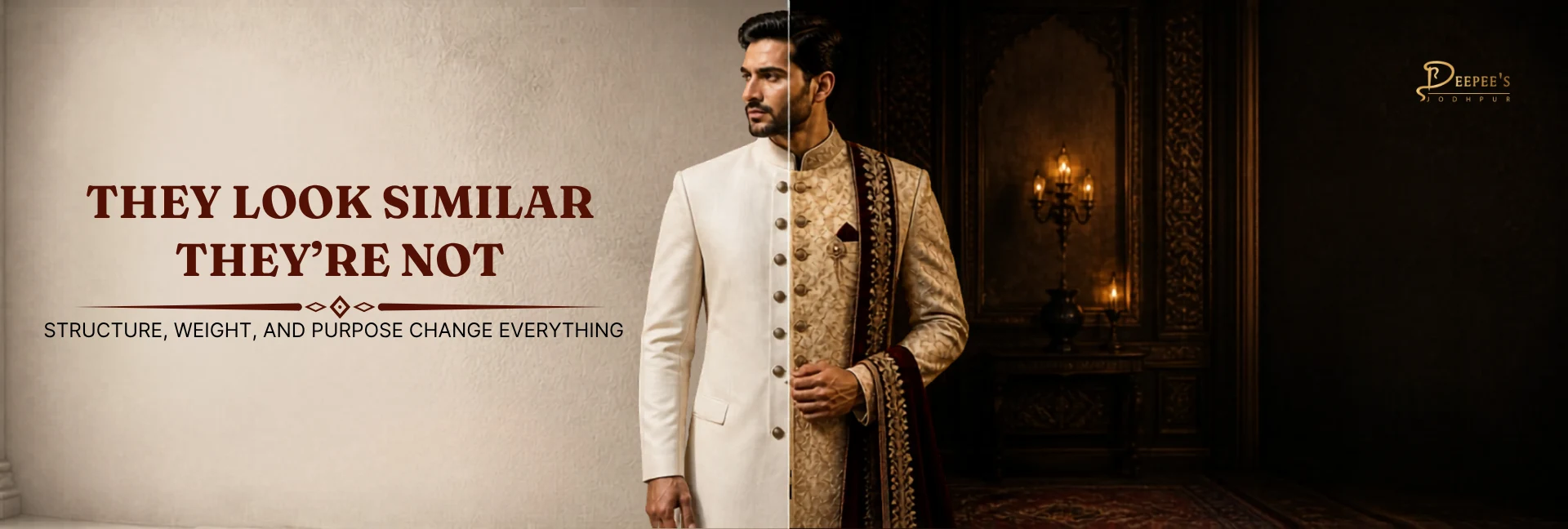
They Look Similar—But They’re Not
Walk into any wedding showroom and you’ll see it happen.
Two garments. Same length. Same silhouette. Same first impression.
And yet—completely different outcomes when worn.
The Achkan and the Sherwani are often mistaken for each other, especially by first-time buyers or even grooms who are navigating Indian menswear for the first time.
At a distance, they blend.
Up close, they differ.
On the body—they transform entirely.
One gives you:
- ease
- structure
- quiet authority
The other gives you:
- grandeur
- presence
- ceremonial weight
And the real mistake most men make?
They choose based on appearance, not experience.
- ₹21,500.00
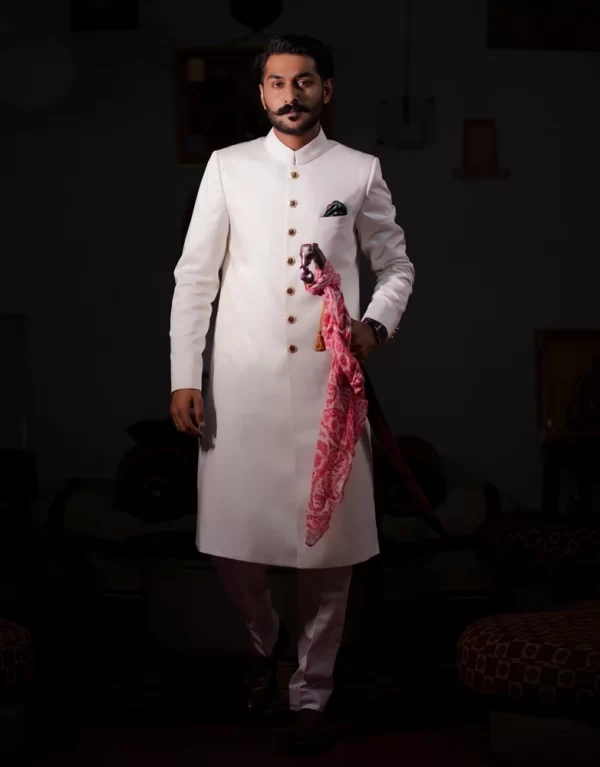
What is an Achkan?
The achkan is one of the most refined garments in Indian menswear.
Rooted in royal dressing traditions, it was designed for:
- formal settings
- daywear elegance
- structured, composed appearances
It is defined by:
- A front-open construction with button closure
- A length that falls around the knee
- A close, tailored fit that follows the body
But what truly sets the achkan apart is its restraint.
It does not rely on:
- heavy embroidery
- excessive layering
- visual overload
Instead, it focuses on:
- clean lines
- controlled silhouette
- precision tailoring
The achkan doesn’t try to stand out.
It allows the wearer to.
- ₹82,999.00
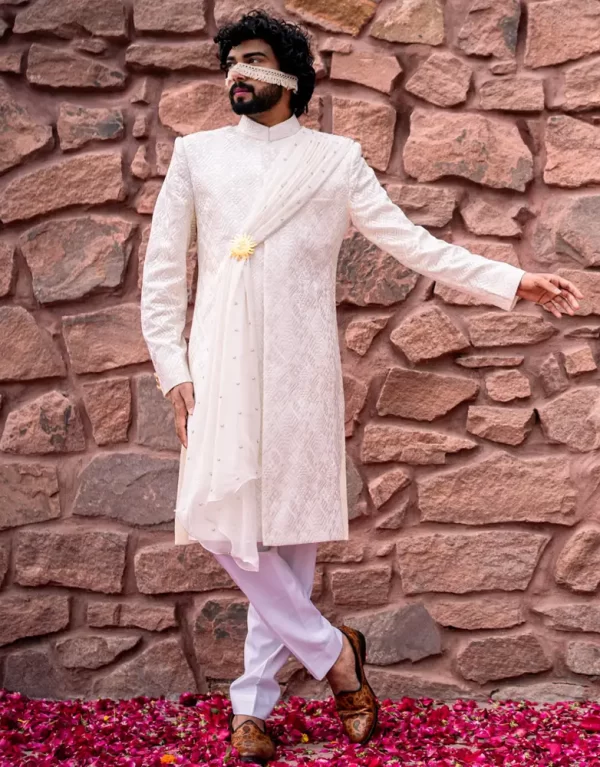
What is a Sherwani?
The sherwani, on the other hand, is designed for a very different purpose.
It is ceremonial.
Historically associated with Mughal-influenced court dressing and later adapted into wedding wear, the sherwani is built for occasions where visual impact matters.
It is characterised by:
- Rich fabrics like silk, brocade, and jacquard
- Surface embellishments, embroidery, or textures
- A slightly heavier construction
Unlike the achkan, the sherwani is not subtle.
It is designed to:
- attract attention
- hold visual weight
- create a strong festive presence
The sherwani doesn’t hold back.
It makes sure you are seen.
The Real Differences: Achkan vs Sherwani
Understanding the difference between the two is not just about knowledge—it’s about making the right decision for your occasion.
Let’s break it down logically.
1. Structure: Sharp vs Layered
- Achkan → Sharper, cleaner, more body-defined
- Sherwani → Slightly looser, layered, more volume-driven
The achkan is tailored to follow the body closely.
The sherwani allows more space for layering and design.
One is about precision.
The other is about presence.
2. Weight: Light vs Ceremonial
- Achkan → Lighter, easier to carry for long hours
- Sherwani → Heavier due to fabric, lining, and embellishments
This difference becomes very real during weddings that stretch across hours—or even days.
An achkan allows ease of movement.
A sherwani demands endurance.
Comfort vs ceremonial weight.
3. Occasion: Versatility vs Tradition
In sherwani vs achkan wedding decisions, context is everything.
Achkan works best for:
- Day weddings
- Receptions
- Formal gatherings
- Modern wedding aesthetics
Sherwani works best for:
- Main wedding ceremonies
- Traditional rituals
- Grand evening functions
The achkan adapts.
The sherwani defines the moment.
4. Styling: Minimal vs Elaborate
Styling is where the visual difference becomes even clearer.
Achkan Styling
- Paired with trousers, breeches, or churidars
- Minimal accessories
- Focus on fit and silhouette
Sherwani Styling
- Paired with churidar or dhoti
- Styled with stoles, brooches, layered accessories
- Often includes footwear and headgear coordination
The achkan simplifies styling.
The sherwani builds a complete visual narrative.
5. Longevity: Repeat Wear vs One-Time Statement
This is a crucial factor modern buyers often overlook.
- Achkan → Highly versatile, can be worn across multiple occasions
- Sherwani → Typically occasion-specific, limited repeat usage
In today’s evolving indian groom outfit difference mindset, this matters more than ever.
Because men are no longer buying outfits for a single event.
They are investing in garments that last.
Which One Suits Modern Weddings?
Modern Indian weddings are changing.
Grooms today are:
- More conscious of comfort
- More aware of personal style
- Less inclined towards over-embellishment
This shift has made the achkan increasingly relevant.
Why?
Because it offers:
- structure without heaviness
- elegance without excess
- versatility beyond the wedding day
However, the sherwani still holds strong value in:
- traditional ceremonies
- cultural expectations
- grand, visually rich weddings
The decision is no longer about right or wrong.
It’s about alignment—with the event, the setting, and the person wearing it.
Deepee’s Recommendation Philosophy
At Deepee’s Jodhpur, the conversation doesn’t start with the garment.
It starts with the wearer.
The approach is simple:
- Understand the occasion
- Understand the individual
- Then recommend the garment
Under the guidance of Abhishek Trivedi, the philosophy is clear:
Style should feel natural—not forced.
This means:
- Achkans are recommended for refined, modern aesthetics
- Sherwanis are suggested when ceremonial presence is essential
- Both are tailored with precision to ensure perfect structure
Because no matter what you choose—
Fit, balance, and comfort remain non-negotiable.
The Decision, Simplified
If you want:
- Structure, comfort, versatility → Achkan
- Grandeur, tradition, statement → Sherwani
But beyond that— Ask yourself one question:
How do I want to feel in this garment?
Because the right outfit is not the one that looks best in pictures.
It is the one that feels right from the moment you wear it.
Conclusion
Find Your Perfect Wedding Fit
Deepee’s Jodhpur
Address: 2nd Polo, Paota C Road, Jodhpur (Raj.)
Call: +91 9530123489
Visit: www.deepeesjodhpur.com
Explore achkans and sherwanis tailored to your style, occasion, and comfort.
Visit the store or browse online to find a wedding outfit that reflects who you are—not just the event you’re attending.
Frequently Asked Questions
The achkan is lighter, more structured, and minimally designed, while the sherwani is heavier, more decorative, and suited for grand occasions.
It depends on the event. Achkans suit modern and daytime weddings, while sherwanis are preferred for traditional ceremonies.
Yes, modern grooms increasingly prefer achkans for their comfort, elegance, and versatility.
Yes, sherwanis are generally heavier due to richer fabrics and embellishments.
You can explore premium achkans and sherwanis at Deepee’s Jodhpur, known for tailored craftsmanship and structured menswear.